
San Mateo Resident Lookup Record Map
No single San Mateo record is a complete resident census. Deeds answer ownership, court indexes identify case roles, and vital records confirm events. Permits, businesses, licenses, directories, and newspapers add context. Match the source to the question before treating a name as evidence.
| Record | What It Confirms | Where | Access |
|---|---|---|---|
| Property or deed | Ownership, vesting, transaction, and a possible mailing clue | ACRE Property Maps and Recorder index | Free map/index; copy or public-terminal route for images |
| City permit or code case | Address, project, contact, inspection, or case status | San Mateo city CSS and records request channel | Public search; privacy and investigatory limits apply |
| Superior Court case | Party name, case type, events, and public disposition | San Mateo Superior Court | Free index; copies and retrieval fees vary |
| Federal court case | Federal party and docket activity | PACER and Northern District of California | Account-based federal access and court limits |
| Vital record | Birth, death, marriage, or dissolution event and family facts | County Health, ACRE, CDPH, or Superior Court | Copy type and requester eligibility control access |
| Voter status | An individual’s registration, representatives, or vote-by-mail status | My Election Info and state election systems | Identity-authenticated personal lookup; file access is restricted |
| Business, FBN, or license | Entity role, trade name, credential, or public discipline | California SOS, ACRE FBN, or DCA | Searchable public fields; business address is not home proof |
| Directory or newspaper | Historical residence, spouse, occupation, and community links | San Mateo Public Library and genealogy resources | Reference, microfilm, or database rules vary |
Use an address-first route for a common name, and a name-first route for a rare spelling or family link. A deed party, business agent, or court allegation is not automatically a resident or finding.
Build a Two-Record Identity Match
Same-name errors are the main resident-lookup risk. Preserve initials, suffixes, married names, diacritics, transliterations, entity spellings, dates, addresses, and family links. Also separate San Mateo city, San Mateo County, and USPS San Mateo mailing geography. One unusual name is a lead; two stable joins are stronger.
Pair a recorded party with a city permit at the same address, or a directory spouse and occupation with a census household. A court party may be a plaintiff, defendant, decedent, heir, creditor, attorney, or business. Record the role. Corrections belong with the original custodian.
Match control: Write down the exact name, source date, record role, address clue, and document number for every hit. Do not merge two people because a city and surname match.
San Mateo Court Fields and Dockets
The San Mateo Superior Court covers civil, criminal, family, probate, small claims, traffic, and other local routes. Its Online Case Access and Public Records Index may show an index without documents. Juvenile, adoption, sealed, and confidential matters follow different rules. A court search is a party-and-case tool.
| Field Label | Type | Required | Options / Format Notes |
|---|---|---|---|
| Case type/division | Selection | Sometimes | Civil, criminal, family, probate, small claims, and traffic routes differ |
| Party name | Text | One lookup route | Surname or company; use variants and narrowed dates |
| Case number | Text | One lookup route | Strongest retrieval key when known |
| Filing date/range | Date filters | No | Useful for separating same-name parties |
| Search | Button | Yes | Executes the index lookup |
Public results may show case number, title, parties and roles, type, filing date, status, division, events, hearings, and disposition. Pleadings are not guaranteed. The court publishes no universal index-start year, so an old blank result calls for Records Management inquiry.
Sample docket inventory: save case number, title, parties, roles, dates, status, division, and disposition. Separate the index, document image, and judgment.
San Mateo Court Copy Route
After finding the case, the San Mateo Records Management mail route asks for case number, parties, approximate filing date or document description, a self-addressed stamped envelope, and a blank check payable to Superior Court marked “Not to exceed.” Staff do not perform open-ended research. Stated response: within 30 days.
Fees are $0.50 per side; $15 certified dissolution; $40 certification; $50 exemplification; $1 per side comparison; $15 searches over ten minutes; and $10 off-site retrieval. Confirm current instructions before mailing.
Self-represented electronic access began for Family Law on August 12, 2024 and Civil on March 3, 2025. Eligible users complete an agreement, schedule an in-person Records appointment, list cases on page three, and show government ID.
The San Mateo Superior Court mail-records instructions show the copy route after a case number is known.
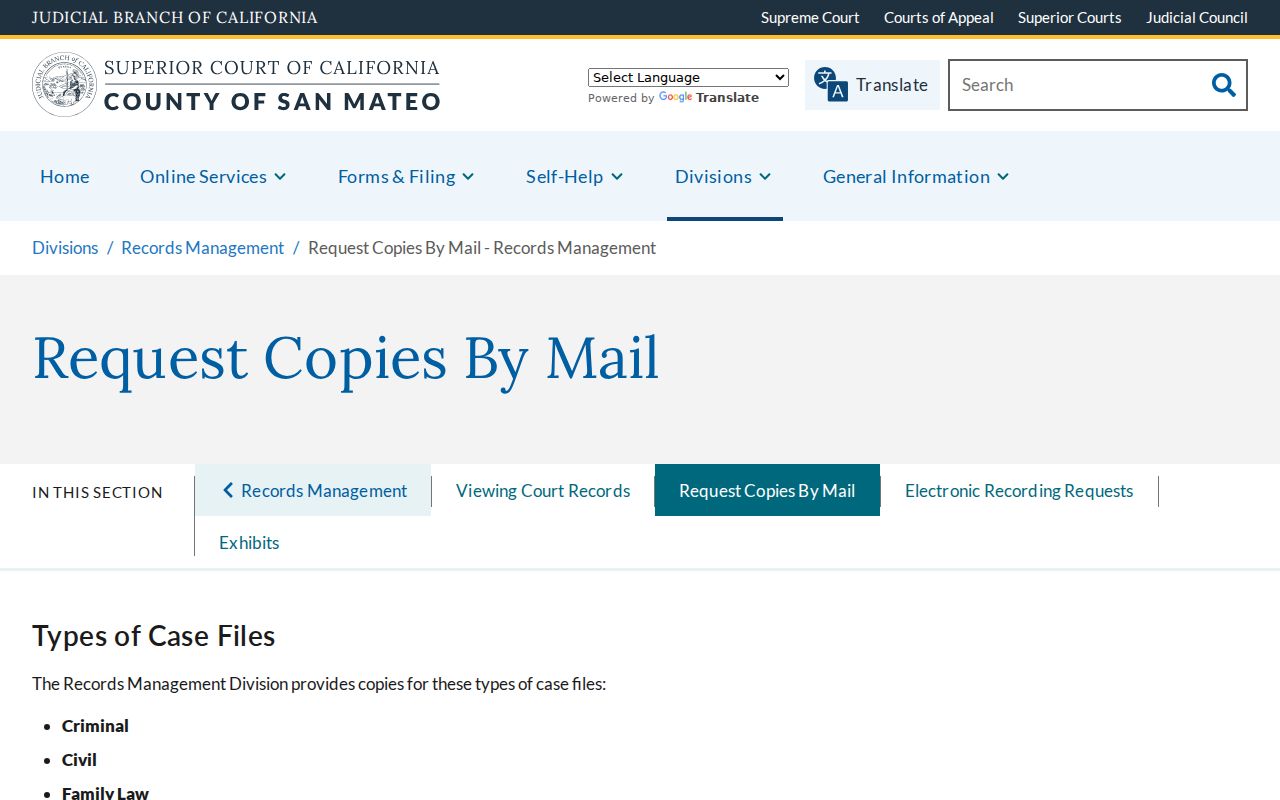
The requested copy supplies the record when available.
Choosing a San Mateo Vital Record
Custody depends on event. San Mateo County Health handles current and prior-year births and deaths; ACRE Recorder handles county births and deaths for all years and public marriages licensed there. Confidential marriage copies come from the County Clerk under Family Code §509. The granting Superior Court holds a divorce decree, while CDPH supplies a state certificate.
| Birth | County Health for current and prior year; ACRE Recorder for all county years; 2026 state fee $31. |
|---|---|
| Death | Same local and county split; 2026 state fee $26. |
| Public marriage | Recorder in the county that issued the license; 2026 state fee $19. |
| Confidential marriage | County Clerk where issued, subject to Family Code §509; 2026 state schedule $19. |
| Dissolution certificate | CDPH certificate route; the decree remains with Superior Court; 2026 state fee $18. |
Authorized certified birth/death copies require a qualifying requester, sworn statement, and notarization when mailed. Informational copies are generally available but not identity-validating. Adoption files are confidential under Family Code §9200. California has no universal 100-year or 50-year opening rule.
The California Department of Public Health fee schedule states the 2026 amounts. A failed search can yield a Certificate of No Public Record while retaining the fee. Use the correct custodian and live processing times.
Verify a San Mateo Resident Across Records
A reliable resident lookup moves from a clue to a custodian, then from an index to a record. An address can anchor a name, but a final match needs another stable fact. Use certified copies when proof is required and informational copies only as marked.
- Normalize name variants, dates, associates, and any known San Mateo address.
- Use a property map, Recorder index, permit, or directory for an address clue.
- Run the Court party search with variants, type, and date; save case number and role.
- Compare with the proper vital custodian; restricted copies are not open data.
- Confirm two joins, then order a copy only if eligible.
Lookup glossary.
- Docket
- The court’s running record of filed events, hearings, and status entries.
- Index versus image
- An index points to a record; an image or certified copy contains the underlying document.
- Certified copy
- A custodian-authenticated copy usable for a legal or identity purpose when eligible.
- Informational copy
- A copy marked for information, not identity-validating use.
When the goal changes to the surrounding street, the San Mateo Street Directory route handles the address chain.
San Mateo Federal Court Lookup
Federal cases involving San Mateo fall in the Northern District of California; bankruptcy is separate. Use PACER for federal dockets, then read party role and court before making a resident match.
The PACER case and document system is the federal source shown below.
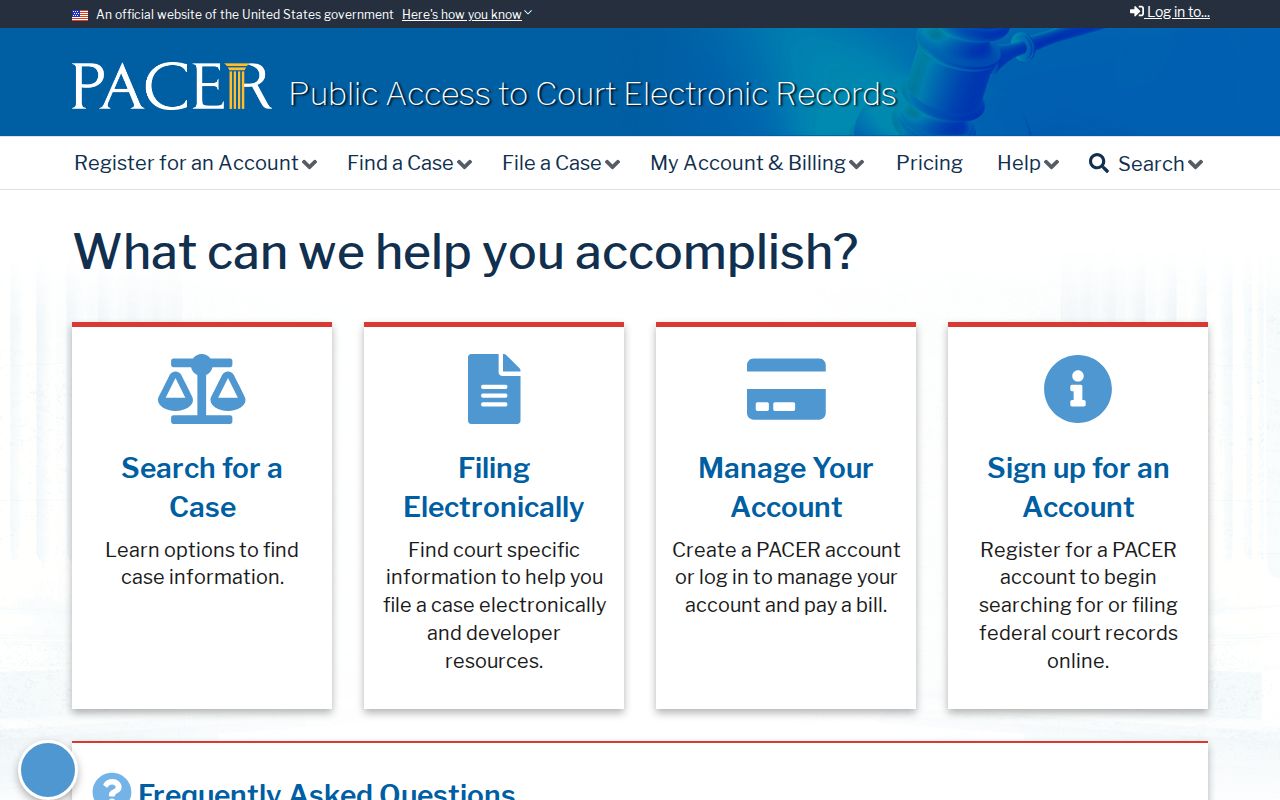
PACER can expose federal filings absent from county search. Published example: $0.10 per page, $3 per-document cap, subject to the low-use waiver and current schedule.
The Northern District of California court site provides district context and clerk routes for San Mateo matters.
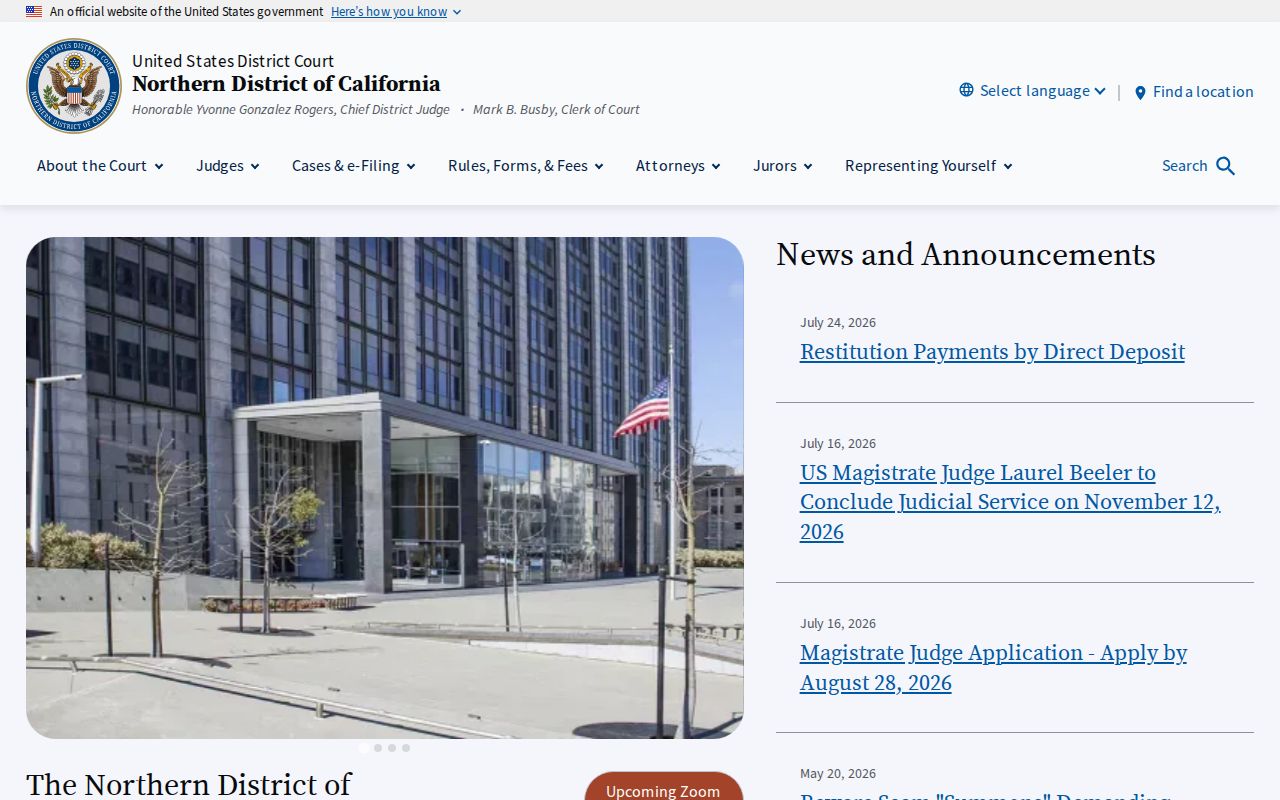
The district image marks the federal and county boundary. A federal party still needs same-name controls and a second identity join.
Heirs, Birth Parents, and Family Branches
Heir research uses probate petitions, notices, distributions, and obituaries. HeritageHub and San Mateo Times microfilm can connect relatives, memorials, schools, clubs, and cemetery clues. HeritageQuest and My China Roots add family research under library access rules.
Birth-parent searches follow California adoption-information, mutual-consent, and court routes. The birth portal is not an adoption index, and Family Code §9200 keeps adoption files confidential. Yearbooks, institutional archives, local directories, and newspapers can place a former classmate. Preserve the source’s stated relationship.
The county library genealogy resource page is the access point for databases; the responsible custodian remains authoritative for a vital event or court record.
San Mateo Voter Checks Have Limits
My Election Info lets an individual check registration, representatives, and vote-by-mail tracking. It asks for first name, last name, date of birth, and sometimes a California ID or last four SSN digits. These authenticate the person; they are not public results.
County Elections is at 40 Tower Road in San Mateo, registrar@smcacre.gov, (650) 312-5222. Elections Code §§2188 and 2194 restrict the wider file to election, scholarly, journalistic, political, or governmental purposes. Statewide access is $100. A specific request covers up to ten named voters, requires full name, date of birth, county, and residence address, and costs $30 each up to a $100 cap. Commercial use is prohibited.
Personal status is not a casual address browser. Signatures, driver-license and Social Security identifiers, and Safe at Home participants are withheld or controlled. “Inactive” does not prove a move, and no result does not prove no prior residence.
San Mateo Business and License Clues
Business filings can corroborate a name, not a home address. California bizfile searches by entity name or file number, with entity type, status, and filing-date filters; basic results list the closest 500. Results can show entity number, formation, status, jurisdiction, street/mailing addresses, agent, due dates, and filings. Beneficial ownership is not a general field.
ACRE FBN search includes document number and filed-date criteria. The California DCA license search and board portals can show credential, status, dates, and public discipline. A trade filing or license proves an affiliation, not residence.
The California bizfile, ACRE FBN, and license routes help with shops, practices, and filings. New IDs beginning “B” were announced in December 2025 for new corporations, LLCs, and LPs; legacy IDs remain.
California’s State Controller unclaimed-property search can return an owner name and last-known city or address clue. A claim requires proof and does not establish current residence.
San Mateo Resident Lookup Boundaries
The California Public Records Act, Government Code §§7920.000-7931.000, is a fallback for an existing, reasonably described record. An agency normally responds within ten calendar days, with up to fourteen more for unusual circumstances. Name the custodian, record, dates, address, permit, or case number. CPRA does not require a new record or an open-ended identity answer.
Privacy rules can limit court, adoption, juvenile, DMV, voter, investigatory, and confidential vital data. Safe at Home gives eligible people a substitute mailing address and confidential voter registration. The Safe at Home guidance explains the protected-address route. CCPA/CPRA rights include access, correction, deletion, sensitive-data limits, and sale/sharing opt-out when applicable; the Delete Act adds a broker-deletion mechanism. These rights do not erase government records.
Lawful use. A San Mateo resident lookup is for personal, lawful research. California Penal Code §646.9 addresses stalking, and records must not be used to stalk, harass, threaten, impersonate, or intrude on a protected person.
California Megan’s Law has statutory search, exclusion, and use limits. It is a safety registry, not a complete criminal-history service. Read the warnings and confirm court information with the court.
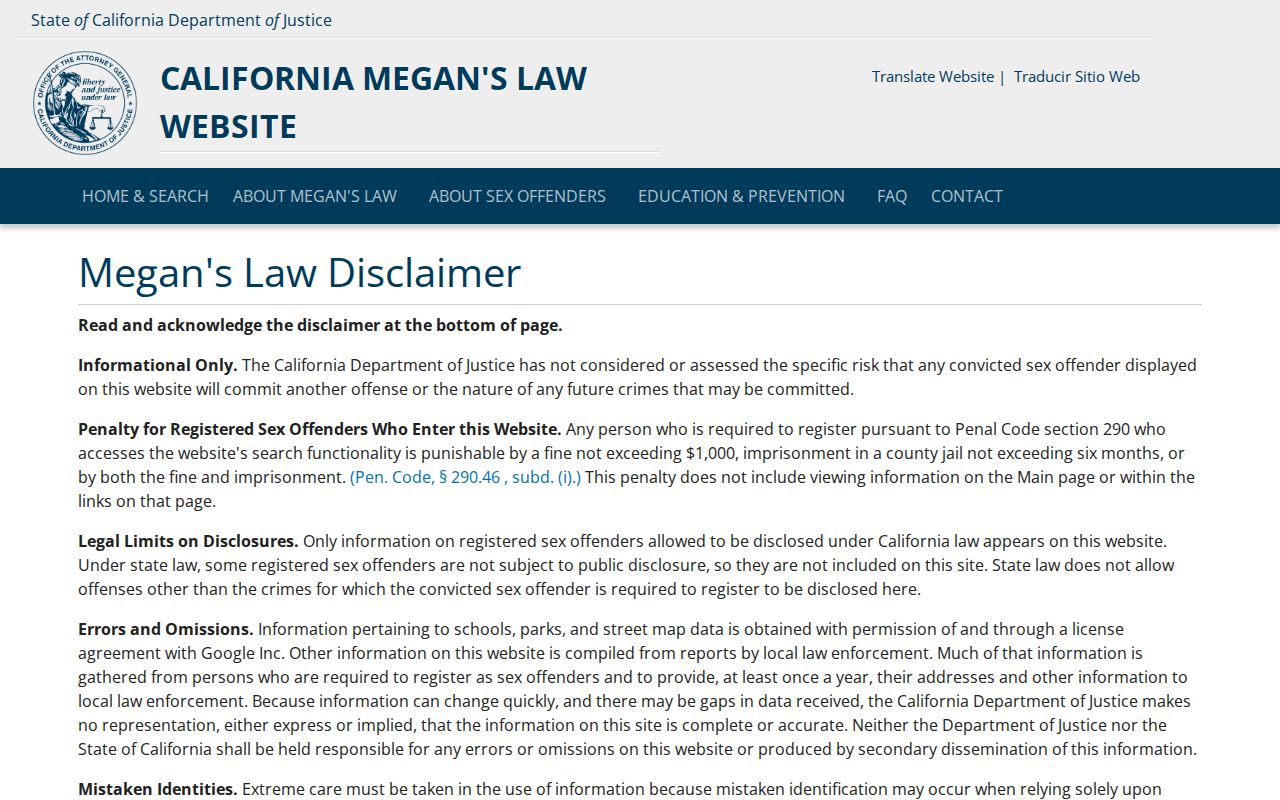
The registry image shows why a San Mateo resident lookup needs source-role discipline. A registry profile, court index, vital certificate, and address record answer different questions.